Saturday, July 9, 2016

Black Lives Matter Please Read Black Conservative Authors

Black Lives Matter and Rich White Liberals say they are shocked, shocked that black men are sometimes killed by police officers.

They say they want fewer black men to be killed by police officers.

Serious question: have Black Lives Matter and Rich White Liberals addressed the fact that young black men commit a vastly disproportionate amount of crime?

And, given that young black males commit a vastly disproportionate amount of crime in the US, they have more encounters with police, and are, therefore, more likely to get shot by police? And, further, police are going to be more guarded and more on edge when dealing with them?

Young black males also don't marry the mothers of their children at very high rates. About 75% of African American children today are being raised without their father being married to and living with their mother. Being raised without the presence of a biological father is statistically correlated with criminal activity as an adult.

You want to blame white racism? In 1940, the black illegitimacy rate was 14%.

Maybe Black Lives Matter and Rich White Liberals should be telling black men to marry the mothers of their children and support them and parent them? Thus making it less likely that young black males will turn to crime?

How about in schools? "The national graduation rate for black males was 59 percent, 65 percent for Latinos, and 80 percent for white males for the 2012-13 school year, according to the report"

Read the authors dubbed "Black conservatives." Read Orlando Patterson, Shelby Steele, Larry Elder, Allen West, Thomas Sowell, and Walter E. Williams.

Read also Abigail Thernstrom, an old white lady, who, with her husband Stephan, published an exhaustive and irrefutable study of the achievement gap: No Excuses: Closing the Racial Gap in Learning.

The achievement gap: black students consistently score at the bottom. East Asians at the top, then whites, then Hispanics, then African Americans. THIS is a scandal. THIS is a crime. THIS is something we should all be worked up about.

I teach black kids. I taught in Africa. I know black kids are every bit as smart as anyone from East Asia, the top scorers. But we accept it as the norm that young black males score at the bottom, year after year.

How do we address it? Student university applicants receive supplementary points for ethnicity. Hispanics receive lotsa points. Blacks receive the most points. East Asians *lose* points. A perfect East Asian student loses points - for being East Asian. See "For Asian Americans, a Changing Landscape on College Admissions" LA Times February 21, 2015, here.

That's how we address the achievement gap. By lying and cheating and stealing and punishing excellence and rewarding failure. It's Harrison Bergeron.

Let's change that. Let's insist that students learn. Revolutionary!

Abigail Thernstrom insists that it is NOT biology or genetics OR white racism that keeps young black men down academically.

It is culture. No dad. Too much TV and not enough books and emphasis on reading in the home. Lack of emphasis on comportment and respect for teachers.

If you have a problem with white people, and don't want to listen to Abigail and Stephan Thernstrom because they are white, listen to Orlando Patterson, who is black.

Have you heard Orlando Patterson in the media talking about Black Lives Matter?

No. Because he doesn't say what the anti-white, anti-police, anti-personal-responsibility media wants him to say.

Orlando Patterson published a book in 2015 that exhaustively documents how black culture affects black youth. Is the media paying attention? No. You can: read The Cultural Matrix.

Black Lives Matter blames white racism. If white racism is the only force behind disparate outcomes, why do black immigrants from the Caribbean and Africa do so much better than blacks born in the US?

Black conservatives talk about a disproportionate number of America's young black men choosing to pursue anti-social lifestyles including criminal activity, production of illegitimate children who receive no fathering, and failure at school.

Orlando Patterson calls this the "cool pose culture" that is much more seductive than "acting white" and doing well at school and investing in a nuclear family.

What makes cool pose culture so attractive? Patterson says that, inter alia, Rich White Liberals reward young black men for being outlaws. They are considered cool. This coolness of black male outlaw behavior permeates our culture. Don Cheadle cashed in on it in his biopic about Miles Davis. Rap and Hiphop are built on it.
Shelby Steele blames white guilt.

Or don't. Don't read black conservatives. Continue to insist that young black men do everything they do because they are little automatons steered around by white racism, and incapable of making sane decisions for themselves.

And continue to believe that they need rich white liberals like you to rescue them and make excuses for them and cheer on the killing of cops.

Yeah. That will work.

I can't vouch for any of these graphics. I just did a google image search of key trends. Have a look. Check the numbers. If a graphic is wrong, let me know, and I'll remove it.


Black Lives Matter Is a Lynch Mob with Blood On Its Hands

Ting Shen / Dallas Morning News / Reuters 
Thursday night, before I went to bed, I felt a sudden sense of urgency.

I felt that I needed to tell someone, anyone, that manipulating news, distorting truth, and manufacturing statistics in order to demonize white police officers is a deadly game.

I suddenly felt that I needed to insist that there is no connection between Ferguson and Baltimore, that these are two completely different events, that lumping together these events is done for one reason only -- to demonize all white police officers as murderous white supremacists out to murder innocent blacks.

I felt this sudden urge to shout that hate mongering never stops with words. Hate mongering always drinks blood.

It was bedtime and I was suddenly agitated, feeling that I had to tell someone that it was just a matter of time till "Black Lives Matter" resulted in more innocent police officers murdered. Yes, more. Because we've already had police officers murdered for the Black Lives Matter mythology. Wenjian Liu and Rafael Ramos were shot execution style in NYC in 2014. One Asian, one Hispanic, but light skinned enough to satisfy the blood-hunger of Black Lives Matter human sacrifice.

Michael Brown never had his hands up. He never said "Don't shoot."

Eric Garner died of his own chronic health problems and resisting arrest. The arresting officer was a black woman. Two of the arresting officers for Freddie Gray were black themselves. Sandra Bland killed herself.

Tamir Rice was pointing a gun at passersby. Do I wish the police officer had not shot Rice? Yes. Do I think that a young man who repeatedly points a gun at passersby is engaging in risky activity? Yes!

If Black Lives Matter really cared about black lives and thought that those lives matter Black Lives Matter would be in every black neighborhood in the US right now urging African American men to put aside criminal activity and to comply with every request police officers make and *sue later* if necessary.

And yes sometimes police officers hurt and kill innocent people who are complying. The answer in that case is a trial, not a racist lynch mob.

I woke up Friday morning and heard the news of the Black Lives Matter lynch mob massacre in Dallas. And I cried.


Monday, July 4, 2016

Fourth of July: The Good News and Beyond My Comfort Zone


I wanted to do something Fourth-of-July-y this Fourth of July. I stumbled across a web page announcing a public reading of the Declaration of Independence at Ringwood Manor at 2:30 pm.

Ringwood Manor is the site of an eighteenth century ironworks and a manor house built in 1807. The grounds include meadow, a pond, and woods. I regularly see osprey, merlin, and wood duck. Antoinette and I used to pick black walnuts there, and stain our hands orange with the spicy, fragrant nut husks that daddy would drive over to help us to get the shelling done.

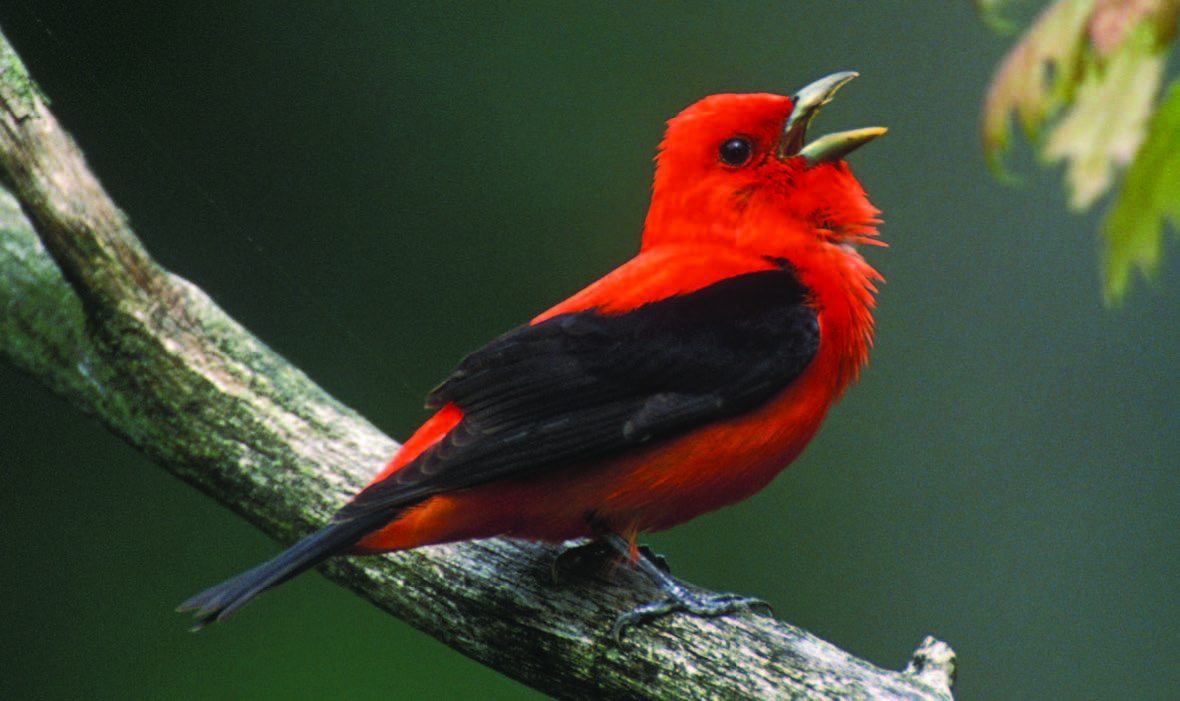
I went first to Skylands Manor, just two miles away. It was a spectacular sunny day with an intense blue sky, and I saw no birds. It's all the more remarkable that when I came up here the other day, a day of mist and completely overcast, seeking comfort over my medical woes, I practically tripped over all the birds I saw, including the primary colored ones, all right next to each other: goldfinch, bluebird, and scarlet tanager. And a bear!

I did hear one bird today and I knew what was, but I didn't know what it was.

I have cognitive issues. I know I am dyslexic, but there's something else going on too, and I don't know the word for it.

Here's how the cognitive issues worked today: I heard a bird, and I knew that part of my brain knew exactly what bird it was – and my conscious mind had no idea. Nothing. Blank slate. Then, I said, out loud, "This bird sounds like a belted kingfisher and it is a hairy woodpecker."

Why didn't I know it was a hairy woodpecker till I said that out loud? No idea. I often understand things by saying them out loud, or writing about them. Until I do, it's just a big wad of glowing, multicolored stuff.

I am a spaz. I would call myself a "luddite" but I'd have to move up several centuries to qualify.

I am afraid of technology.

Today I felt a sudden, inexplicable urge to do something I have never done before. Attempt to take photographs to convey to others how beautiful the woods are to me.

Facebook friend Anna Siemienowski Brzuza mailed me a camera *five years ago.* Today for the first time I attempted to take photos, just for the sake of taking photos.

Picture one is my attempt to communicate, via a photograph, to other people, how beautiful the woods are. I like this photograph. I think it worked.

Picture two is one of the plantings at Skylands.

Pictures three and four are a wall of boulders with moss and trees. Again, just so beautiful. I don't know why the two photographs are different.

Pictures five and six are an attempt to show the black, pebbly bark of a persimmon tree.

Now, here is the good news. Let me emphasize: GOOD NEWS. FOURTH OF JULY GOOD NEWS.

I walked downhill from Skylands toward Ringwood Manor, and I saw something I'd never seen before. A traffic jam on Sloatsburg Road. This is a wooded road that is usually empty.

My first thought: some horrible accident.

But, no.

All these people, these hundreds of people, were sitting in this dead still traffic jam, because they had driven up here into the woods to attend the reading of the Declaration of Independence at Ringwood Manor.

I started crying on Sloatsburg Road. I'm crying now.

A hot, beautiful summer day. Could have gone swimming. Could have stayed home by the grill. Could have gone to a ball game.

Drove up here, to hear the Declaration of Independence read aloud.

Wall to wall people. Cars parked on grass. Staff overwhelmed. "Legalize the Constitution" and "Ted Cruz 2016" bumper stickers.

I love my country.

Men in authentic eighteenth-century costume, carrying authentic eighteenth-century muskets, what the Founding Fathers had in mind when they wrote the second amendment, mingled. They handed out wooden "guns" to the kids and trained them in their usage.

"If you don't have a musket now, don't worry," the handsome man with the resonant voice said. "There will be attrition, and you will soon be able to take a weapon from a fallen comrade." Whoa. Let these kids know how their rights were won.

A man up ahead of me said to the woman he was with, "I'm embarrassed to ask you this."

Of course I listened in. I thought maybe he'd ask about unusual sexual proclivities, or body odor. No. "The Bill of Rights came *after* the Constitution?" His voice was urgent. He really wanted to know. She really wanted to explain. It was great.

The rebels tried to rile up the crowd. We were to pretend we were eighteenth-century colonists. When they asked if we were ready to lay down our lives, to kill and die, I raised a peace sign. "Can't we work this out amicably?"

The guy next to me, who kept yelling things like "Behead the king! Indict Hillary!" shot me a dirty look.

By the time the reader got to the end of the Declaration of Independence, I was ready to go fight. That's what that document is – it's pro-war propaganda. It gets your blood boiling.

"Our lives, our fortunes, and our sacred honor." I cried again.

Listen.

Our country is beset by a Political Correctness that hates the West, the Judeo-Christian tradition, and that blames America first.

We are addicted to a substance, petroleum, that entices us to get into bed with people who have vowed to wipe us out.

Sometimes things look dark. Sometimes things *are* dark.

The other day, Julie Davis, author of "Happy Catholic," introduced me to this quote from Thomas Merton.

"Keeping a journal has taught me that there is not so much new in your life as you sometimes think. When you re-read your journal you find out that your latest discovery is something you already found out five years ago. Still, it is true that one penetrates deeper and deeper into the same ideas and the same experiences."

Freedom is sometimes snuffed out. But the spark never dies.

God Bless America.


Saturday, July 2, 2016

Roads I Am Afraid to Drive: Clinton Road, Driscoll Bridge, Skyline Drive


Source
Back in 2013 I had not owned a car in almost thirty years. Then my sister was diagnosed with a terminal illness and given very little time to live. I wanted to spend as much time with her as possible, and help out in every way I could. I had to buy a car.  

Driving again made me anxious.

Too, I was driving in *Paterson.*

There is a book called the DSM, short for Diagnostic and Statistical Manual of Mental Disorders. It lists all known mental diseases, from acute stress disorder to voyeuristic disorder.

Someday, I am going to publish an illustrated version of this manual. It will be illustrated with photographs of drivers in Paterson, NJ, demonstrating every one of the mental illnesses listed in the DSM – and doing so while driving.

People drive badly in Paterson, is what I'm saying. Badly? Criminally. Insanely. Flamboyantly so.

Casually running a stop sign is child's play in Paterson. Turning left at a red light is standard. Green lights in Paterson do not mean "Go." They mean, rather, "Text!" "Groom!" or "Argue with your passenger while using outlandish hand gestures!"

Paterson drivers on crowded city streets regularly veer into the left lane of oncoming traffic and then squeeze into any space between you and the car in front of you in order to gain one car length of distance. You meet this person at the next red light, and the next, and the next. No matter. He is an hombre and he is from the Dominican Republic and he is not going to allow any gringa to drive in front of him.

And then there are the Paterson pedestrians who cherish and uphold a local cultural tradition of completely ignoring crosswalks and traffic lights and physics and defiantly walking in front of moving cars at the last minute – thereby making some important point about Civil Rights – not.

The other day I was behind a brand new Maserati, starting price: over $130,000. I see more brand new luxury cars in Paterson than any place else I've ever lived, but then I've never lived in a heroin shopping mall before. I'm a libertarian on drugs – I'm not a libertarian and I'm not on drugs; rather, I take the libertarian stance on drugs. I don't care if you want to ruin your life with heroin. But please select a designated driver if you're going to be on the same street as I after you shoot up.

My initial anxiety about driving didn't last. I shortly rediscovered that I love to drive – even in Paterson. It brings out my killer instinct. Can I win against pot holes and shouted threats? Can I win against the constant road blocks and fires and floods? Yes, I can, and when I do, I feel like Mario Andretti. My father loved to drive. I think I inherited it from him. There are moments when I'm driving when I suddenly feel his presence.

Three years into car ownership, there are still two New Jersey roads I am afraid to drive on.

Now, look. If you are reading this and you live in Montana, you are fixing to laugh at me. You drive on mountain roads all the time. I live in New Jersey, famous as a flat state (New Jersey is not really all flat, but let's just go with it.) Mr. Montana bold driver, I'll bet you drive a new car and have four-wheel drive. Me? My car is older than I am (in car years) and it was built for from-here-to-there driving, not stunts.

And I used to be a Peace Corps volunteer in Nepal, the highest country on earth. I was a schoolteacher out in the back of the beyond. I had to carry a full pack five days to get to my post. A fat girl who always got picked last in gym, I trekked to almost eighteen thousand feet. I traveled on roads that were as wide as the bus and whose edges plunged straight down thousands of feet to river valleys. I walked over foot bridges made of a little braid of plant rope and a hell of a lot of empty space. Make fun of me if you want, but, yes, I've been on some really scary roads, and yet the following Jersey roads still scare me.

I'm afraid to drive on Skyline Drive in Ringwood. Actually, what I'm really afraid of on Skyline Drive is other drivers. If I somehow knew I'd be driving the road alone, I don't think I'd be scared at all.

Skyline Drive is steep. My little car huffs and puffs and, if conditions are right, it reaches about twenty miles an hour.

In the rearview mirror, I see an increasingly ever-lengthening caravan of Jeeps, Hummers, and other manly vehicles. I imagine them taking down my license plate number so they can track me down, tar and feather me. Skyline Drive is narrow as well as steep. These folks can't pass me. I wish I could just open up the floor of the car and stick my feet out and peddle desperately, like Fred Flintstone.

Then, it all goes in reverse. Skyline Drive is steep going up and coming down. Going down is much more fun. Then I wish I were a kid on a sled.

My real New Jersey road bête noir is the Driscoll Bridge. Right now, as I type these words, the soles of my feet and the palms of my hands sweat, and my gut goes cold.

Wikipedia claims that the Driscoll Bridge is the widest motor vehicle bridge in the world, and one of the busiest. Wikipedia declines to mention that the Driscoll Bridge is the portal to hell and that the Dark Lord himself mans the toll booth.

The Driscoll Bridge is on the Garden State Parkway. The Jersey Shore is the Garden State's jewel. One must go down the shore, to swim, to visit relatives, to birdwatch. One must go over the Driscoll Bridge.

My mother used to pack bologna sandwiches on rye bread and pack us up in the car and we'd drive to Aunt Phyllis' house down the shore. We'd pass all the New Jersey landmarks: the giant beer bottle, and … cue scary music … the Driscoll Bridge.

I'd squirm in the backseat.

I never mentioned how scared I was on that bridge. I think part of the reason I am so afraid of it now is that I am feeling the leftover unresolved fear from childhood.

A while back New Jersey's best birdwatcher invited me on a birdwatching jaunt down the shore. My first thought was not "Oh, goodie!" but, "I'm going to have to drive over THAT bridge."

Some bridges have vertical structures rising from their sides toward cables that run back down to the bridge. These structures fill the peripheral sight of the driver. The driver can feel that she is inside something, something like a web. It provides, as Gaston Bachelard called it, the illusion of protection.

The Driscoll Bridge lacks any vertical supports on its side. The driver sees nothing but sky in her peripheral vision. As the driver rises on the bridge's incline, in addition to seeing nothing to the left or right, the driver sees nothing in front of her. Just sky. On the Driscoll Bridge, you can feel like you are driving into the sky. Since you know your car can't fly, that means you feel like you are about to plunge into the Raritan River. That may be fun for some people. Sick people.

Finally, there is a road I am not afraid to drive on at all.

Clinton Road in West Milford is often called America's most haunted road. What happens on Clinton Road?

The Iceman kills you and hides your body. The Ghost Boy throws coins back at you. The extraterrestrials kidnap you and probe your anus. Chimeras do what chimeras do best. And the Jackson Whites menace you with large dogs.

Each one of these alleged threats requires a footnote.

Richard Kuklinski, aka The Iceman, was born in Jersey City of Polish and Irish immigrant parentage. His parents, especially his father, were very abusive. Sorry, no excuse. Richard grew up to be a contract and serial killer and a really vile POS. Kuklinski sometimes stored his victims in an industrial freezer. This was meant to disguise the time of death and thwart investigators.

It is said that Kuklinski buried one of his victims near Clinton Road. A vulture feeding on the corpse revealed the body to a biker. Investigators discovered signs of the freezing in the corpse, and Kuklinski was arrested and had to face justice.

The Ghost Boy allegedly hangs out in the waters where he drowned under the bridge on Clinton Road. You offer a quarter to him; he throws it back. I am unaware if he makes change. You probably have to buy some souvenir to get change.

Police and other credible witnesses reported UFOs on the Wanaque Reservoir in 1966. The sighting gained national attention. It was amusing to hear national nightly news anchors, who were the voices of God in those days, attempt to pronounce "Wanaque." Apparently the extraterrestrials moved operations a few miles west of the reservoir to Clinton Road.

The chimeras, or hideous, malformed beasts, are from the old Jungle Habitat, a short-lived West Milford theme park. Between 1972 and 1976, Jungle Habitat featured wild animals in settings visitors could drive through. A man was attacked by a lion and a woman was bitten by a baby elephant. Many animals had to be euthanized after contracting TB. After the park closed, people reported finding the carcasses of decaying wild animals on the grounds.

The fear of Jackson Whites is hardest to explain to anyone not from northern New Jersey. Even the term "Jackson White" is controversial. The preferred term nowadays is Ramapo Mountain People.

The RMP are long-time New Jersey residents. Their ancestors include freed blacks and Dutch settlers. Thus they all have Dutch last names and relatively dark skin. They have tended to intermarry with other RMP and to live in the northern, more wooded part of the state.

Many of my students are new immigrants from the Caribbean, South America, Europe, and Africa. Although they live in New Jersey, they have never heard of RMP – or the Founding Fathers, for that matter.

Other students, who were born in New Jersey of New Jersey parents, have heard of RMP and they are convinced that RMP keep large dogs, tote shotguns, and menace anyone who trespasses on their land. Since the RMP live near Clinton Road, the prejudices against them place them on Clinton Road.

Me? I'm not afraid of Clinton Road. You want to drive on Clinton Road at midnight without the headlines on? I'm game.

But I do have this one story to tell.

It was a bright, sunny day in that most frightening of environments: the adjunct office at a contemporary American university. No cold winds blew, no shutters banged, no shadows loomed, no mad scientists percolated, no Native American burial ground moldered beneath our feet and nothing went bump in the night. But I was about to encounter the macabre.

Nicole Kattowski, a straight A student, walked into the adjunct office. She was looking for a topic for her final paper.

"Write about whatever you want to write about," I said. "If you write about a topic that interests you, you will write a good paper."

"I like horror," she said.

"Great, then. Let's work on horror. We need to get more specific," I said.

"Okay," she said. "How about Clinton Road? You know, the Ghost Boy? The Iceman?"

"Okay," I agreed. "I want to familiarize you with peer-reviewed scholarship. Chances are we won't find a scholarly article specifically about Clinton Road, but I'm sure we can find one about horror."

We turned to some academic databases and found a very good article that would meet Nicole's needs. We printed it out and … the article had no eyes.

I mean, in the place where the letter "i" should have appeared, there was an empty space. I used those academic databases for years, and that computer, and that printer. Nothing like it had happened before or since.
The article that Nicole and I found 

Friday, July 1, 2016

"Happy Catholic" Blogs "God through Binoculars"


Julie Davis, author of the excellent book "Happy Catholic," blogged passages from "God through Binoculars" this week.

"God through Binoculars" is my latest book. I am seeking a publisher now.

I am touched and honored that Julie Davis found something worthwhile in the pages to quote on her blog.

You can read Julie's posted excerpts from "God through Binoculars" at the four links below. Below that, you can find a link to my review of "Happy Catholic" and the Amazon page to buy Julie's book.

Links to Julie's blog posts from "God through Binoculars"


My review of "Happy Catholic"


Amazon page for "Happy Catholic"


Wednesday, June 29, 2016

Alone with a Bear and Primary Colors

Source
Source
Source
Source
I'm sitting in a cramped hospital waiting room right now and the big lug of a white man sitting across from me is telling another big lug of a white man a detailed account of his latest golf shot. He is using all those words: birdie, bogie, par, handicap. He's also talking dollars and cents. "You pay a hundred and eighty dollars to join the league … if you win, you pay less and less."

He's dealing with the fear and discomfort of sitting in a hospital waiting room by talking about something he loves.

Me, too.

I've got a lot of medical stuff going on and it's a drag. It's doubly a drag because I'm handling it all alone. That's made especially challenging by the fact that I'm on a special diet. It is restrictive and it is depleting me. It is meant to. I am exhausted. I have to drive far to get to my medical appointments and I actually feel like I'm betraying my fellow citizens by getting behind the wheel of a car.

I'm keeping myself alert by blasting the air conditioning and using the GPS even though I know how to get to the hospital. The nagging, strident GPS voice keeps me awake. The desire to smack that back-seat driving bitch silly is just too strong to surrender to slumber.

I'm soothing myself by doing things I love. This past weekend I went to see three films back to back, and reviewed them here.

Tuesday I forced myself out of the house and went birdwatching.

I wonder what people who aren't birdwatchers think birdwatching entails. I wonder if people who aren't birdwatchers think that we, the birdwatchers, see plump, fully-formed birds in bright, eye-catching colors.

We don't.

We don't because the color in bird's feathers is usually created by structure, not by pigments. This is what structural color means – if you take a rock and mash up a bird's feathers, the feather will look gray or black. You will have mashed all of the structure, and all of the color, out of the feather.

OTOH, if you mash up a rock that contains pigment, something like ocher, you can use that mashed up ocher to paint other things the same color as ocher, that is, red-orange.

So, if the light hits a bird's feathers just right, and their structure and the light cooperate to perform the magic of color, you see the color. If the light and the structure are at odds, you see murk.

Birds also often have iridescent colors. Here's how iridescent colors interact with light:

"Iridescent feathers get their color from interference, which is due to waves of light interacting with each other to produce either constructive reinforcement or destructive cancellation of particular wavelengths, or colors."

At times I have looked at a mallard's iridescent head and seen green, the color you see on a mallard's head in a field guide telling you what a mallard should look like. At other times, I have seen royal blue, true purple, and absolute black.

Too, birding is often performed by ear. So we birders know that we are in the same woods with veery or wood thrush without ever seeing them.

And most birds don't want us to see them, so they move very fast. Many birds we see are rapidly moving blobs flying away from us at top speed.

So, a lot of the time, birdwatching actually entails a lot less watching of plump, stationary, brightly colored birds than someone who isn't a birdwatcher might think. The birds we see, much of the time, look more like flying Rorschach tests, the color of shadows and glare, the shape of a hole in a puzzle of leaves, twigs, and spider webs.

There are many different kinds of birdwatchers. Some people are mostly into numbers. They want to see the most birds in a day, or a year. If a lapwing, a European bird, suddenly shows up at Cape May, they will rise at three, drive to Cape May, see the lapwing, get back in the car, and be at work in Jersey City by nine. I have never been one of those kinds of birdwatcher.

I love Skylands but it hasn't offered me the best birdwatching. Cape May, one of the world capitals of birdwatching, has. Birds perch on your nose at Cape May. I've birdwatched at Cape May only twice in my life.

I want to encounter the place where I birdwatch as if it were a friend. I love Skylands. I go so often I rarely see new birds there. I always see the phoebe who nests on the WPA bridge built in 1939. Well, it can't be the same phoebe; I've seen nesting phoebes on that bridge for thirty years. I always see one broad-winged hawk near Mount St Francis, and another broad-winged hawk near Mount Defiance. I always hear a blue-winged warbler in the willows, and a great-crested flycatcher on the rocky bald. I usually see a pileated woodpecker zooming through the trees.

I don't rack up a huge list of birds this way, because I visit the same spots year after year. I do feel deep down good in my soul.

Even so, I had to push myself out the door on Tuesday. It was hot, and overcast, and I was feeling doomed and sad. So I got behind myself, placed the palms of my hands against my back, and pushed myself out the door.

A mist fell as I hiked. My face was surrounded by swarms of gnats. And up ahead there was a Rottweiler in the trail.

And I thought all this very fast: that's a Rottweiler; I'm alone; what am I going to do; no, that's not a Rottweiler. That's a bear. And it's a sub-adult. And I don't see mom. Oh … crap.

And I immediately thought of my Facebook friend Dale Weeks. I am pro gun control. Whenever I say that on Facebook I have to take a lot of incoming. Dale said that he'd been in a difficult situation once, and he was glad he had a gun.

I've been through some difficult situations too – including, when I was a young and foolish hitchhiking world traveler, more than man pulling a gun on me – once, more than one man at once pulling a gun on me. I thought. How did I get out of those tight spots without a gun?

Thoughts of Dale accompanied me as I did the following.

I stood still.

So did the bear. He just stood there staring at me.

I scanned the leaves for any moment, and listened. I looked all around me. I had no idea where the mother bear was. I really didn't want to be between the mother and her cub.

After some minutes, the bear disappeared into the woods. I still didn't move. I just stood there, listening. After some time passed and I didn't hear mom, I walked forward. I've read that you are supposed to speak loudly enough for the bear to hear you, and in a calm tone. I decided to sing "This Old Man" and "God Bless America." And I survived to report it here.

Again, it was an overcast day, and mist fell almost the whole time, but the strangest thing happened. And it was wonderful.

I was standing next to a grassy field I've stood next to hundreds of times. And I *saw* birds. Three dimensional, stationary, brightly colored birds. And not just that. I saw a bluebird, a goldfinch, and a scarlet tanager, all at once. All together. That's just never happened to me before: yellow, blue, and red. The primary colors. All right there in front of me. Posing. Not flying away. The goldfinch and the bluebird were on different branches of the same tree. The scarlet tanager was right behind them in another tree.

The icing on the cake – during the whole hike I was being serenaded by wood thrush and veery, the two most beautiful singers among North American birds.

There were also very visible hooded warbler, yellowthroat, indigo bunting, and, of course, cardinals: more yellow, blue and red.

Look – these aren't rare birds. You might see any of them on any hike at Skylands. But to see them all so distinctly on a rainy day before a scary medical appointment was such a blessing.

Yes, I'm doing all this alone, I always have, and I do feel pretty low.

But I walk out my door, and there it all is. And it is brightly colored, plump, and posing generously so I can get a good long look. At least it was on this day, and that felt like the miracle I needed to go on.

You can hear a wood thrush here: https://www.allaboutbirds.org/guide/Wood_Thrush/sounds


You can read more about structure, color, and birds' feathers here: https://www.theguardian.com/science/punctuated-equilibrium/2007/oct/16/birds-physics

Source

Fear of Medical Settings and Medical Professionals

I've got a lot of medical appointments lately. Three this week. This week's are rather anxiety-producing. I'm going through all this alone and I hate the "alone" part. But I am alone in the universe so I have to pick up my cross and walk. "Cross" is a metaphor and a hyperbolic one in this case. If you rated medical procedures between, say, one being a conventional filling for a cavity at a very good dentist, and ten being trying to hold someone with advanced Ebola back from the door of a grisly death, the medical procedures I'm going through this summer are really only at level four: relatively low risk, predictable outcome, and to treat chronic stuff, not immediately life-threatening stuff.

I still hate it. Since I'm dealing with all this alone, I'm blogging about it. It's a way to talk about what matters to me, even if only to myself.

I am afraid of medical procedures, medical settings and medical people.

I really wish I could hug someone before each one, and I really wish I could high five someone and get a pat on the back after I survive each one.

Someone. Not really "someone." I really wish I could hug someone I love and who at least tolerates me (love too much to hope for) before each one, and I really wish I could get a pat on the back from someone I love and who at least tolerates me after each one.

I have been afraid of needles. I've had to have so many injections and so much blood drawn lately that I have to change arms because the most recent bruise hasn't healed before the next extraction / injection.

I want someone to pat me on the back after I, bravely and without complaint, fill the latest test tube.

I can't really say I'm afraid of needles any more. That's a new one. "Fatiguing the response." I think that's a BF Skinner term. 

Someone is afraid of spiders. You dump a jarful of spiders on her lap. She jumps up and yells and screams. Lather, rinse, repeat. Eventually screaming gets old and she is no longer afraid of spiders.

I've had to host so many needles lately I no longer have any time to be afraid of needles.

The best blood drawer was a Muslim guy from Paterson. Big, burly guy. Very much what you'd think a Muslim would look like. He was *superb.* He was charming, in a kind of scary, very masculine way. Like any minute he'd stop smiling and teasing you and asking about your uncle and telling you about his cousin and he'd kidnap you for ransom. I felt *nothing* when he drew my blood.

But. He got into a drag race with some Paterson cops early one morning and it ended up in the papers, and his bosses felt it necessary to terminate his employment. I would never fire a man who could draw blood like that.

***

I wasn't always afraid of medical people and settings.

In 1994 I went to Bloomington, Indiana for a PhD. My first semester there, the professor for whom I worked harassed me for taking off four work days to attend my father's funeral in NJ. I wanted to leave Indiana after these ugly events, but two IU administrators begged me to stay to testify against the professor who had harassed me. They said she was a "sociopath" who had "ruined many" and "almost killed someone." People were afraid to testify against her because she was female and black and they didn't want to be accused of being racist or sexist. I was tapped to testify against her because "You have nothing to lose."

So I spent the spring semester, in addition to taking a full load of graduate courses, testifying to complete strangers, all higher-ups at IU.

In the midst of that, perhaps because of the stress, and unbeknownst to me, my inner ear burst.

I spent the next six years very ill. At times I was functionally paralyzed. I vomited uncontrollably. My vision was compromised.

On the positive side. I lost so much weight so quickly people really wanted to know what diet I was on.

"I can't stop vomiting," I replied.

"Great! I'll have to give that a try!"

Inner ear disorders are really hard to treat. I had no money and no insurance.

Six years. Traveling to three states. Being seen by world class experts.

I received three experimental, pro-bono surgeries from two different doctors.

Each time I was operated on, I was a guinea pig. I was receiving free health care, so I had to be grateful and not make demands. One of the doctors was rather imperious and did threaten to cut off care if I was not fully compliant.

Here's what I had to comply with.

They wanted to discover exactly what was wrong with me. The inner ear is packed up tight inside the skull. I've been told it's inside the body's hardest bone, the temporal bone. So they had to perform tests.

Here was one test.

I was seated in a chair inside a booth the size of a phone booth. I was strapped into the chair so I could not move. I think I remember having electrodes placed on my body but I'm not sure if that's right.

The door of the booth was shut tight. Once the door was shut, the booth was completely black inside. No light of any kind. I was told I could not close my eyes. There was a pinprick of red light. I was told to look at that pinprick of red light. Then, the chair was rotated – sometimes to the left, sometimes to the right. Sometimes fast, sometimes slow. They did not warn me in advance of when the rotations would start, which direction they would go in, how fast or how slow. A voice through a speaker in the booth reminded me to keep my eyes open.

"Please let me out of here," I begged.

"Not much longer," the voice said, through the speaker in the booth.

"Please let me out. I can't take this."

"Not much longer."

That's what "compliant" meant.

After that test, I was strapped into a harness that gripped me between my legs and around my chest. The harness was connected leashes that were connected to walls. I was told to look at a painted backdrop of scenery – blue skies, horizon, green trees and grass. Then the floor gave way beneath me. The floor gave way from the right, from the left, from the back, from the front. Each time experimenters noted which way I fell and how my body attempted to correct itself.

In another test, I was told to lie on a metal table. Freezing cold water was blasted into my broken ear. I immediately spun out of control – overwhelming vertigo and vomiting. Not sure if that test was successful or not. But I was complaint.

In another test, I was told to lie on yet another metal table. All I can tell you about this test is that it was administered by a doctor whose last name was Polish, and the English translation of his last name is the word "swingletree," a word I had never heard before.

If I dared ask what any given test was for, it was always, "You might have MS, a brain tumor, or advanced syphilis."

They always said these things as if they were talking to a lab rat. There was no attempt to couch the words. They could have at least thrown something vanilla in there. Like, you may have MS, a brain tumor, advanced syphilis, or it could just be the common cold and you'll be better in no time with some bedrest and plenty of fluids."

Never. They just ran down their list of life-destroying illnesses.

When it came to the MRI, I was *not* compliant.

"Get me out of here."

"We need this test. We're trying to discover if you have a brain tumor."

They knew damn well that I had an inner ear problem. They knew it wasn't a brain tumor. They just liked sticking pins into their lab animal.

"Miss Gorskek, if you will not submit to this MRI, we will not be able to treat you. It is medically necessary."

"I don't care. Get me out of here."

And they did. They got me out.

"Miss Goshrap, please go sit in this little room we have for pussies like you, and give it some thought. If you won't allow us to perform this MRI, you will not receive any further medical care from us. And take this. It's called Valium."

While I was sitting in that little room, I felt as if Jesus walked up to me and said, "I will do it for you." I don't think Valium can do that. I do think it was Jesus. I went back and did their damn MRI – or Jesus did it for me – and eventually got more, experimental, medical care.

I'm deaf in one ear. The illness didn't do that. The free medical care did. Being deaf makes me sad. I do wish they hadn't done that to me.

So, yes, I am now afraid of medical people and medical settings.

***

In the past four years, I broke my arm, was diagnosed with cancer, and was also diagnosed with a chronic illness. My sister was diagnosed with a brain tumor. She was in four different medical facilities.

Medical people hurt my sister's daughter in unnecessary and even sadistic ways.

There was one doctor who struck me as very cool. He was an older Jewish guy. Fifties or sixties. He was old school.

My sister's diagnosis was misery and death from day one. There is no hope for those with what she had. Of course after I received word I googled the name of the illness. I immediately found web pages calling her tumor "the terminator." It was medical professionals, on dot gov, dot edu and dot org websites calling it that.

That's why, from the beginning, I prayed for a miracle for her. And every time I prayed that prayer, several times a day, I heard a little voice say, "No."

This one good doctor had stepped out of a 1940s movie. He wore suits and ties in sober colors. He knew that Antoinette was "Toni" to all who knew her. I alone consistently called her "Antoinette." She was someone special to me and she deserved her own special name – a long, French name, pronounced correctly. Not Ann Tin Et but Ann Twa Net.

But to everyone else she was Toni, and this doctor called her Toni.

He knew she had no hope. He knew she was dying. He said those things, but never in those words. He chose old, dusty words like "grave condition" and "appropriate caution" and "limited outcomes." He said tough stuff that needed to be said, right to Antoinette's family's faces, and he said it *the way it needed to be said.*

And he did this all day, every day. He specialized in this disease, "the terminator." He had said goodbye to many patients, and not the kind of goodbye a doctor wants to say. "Great! You're healed! I'll never need to see you again! Go out there and have fun at life!" No. He said the other kind of goodbye. I could see it in his eyes. I don't know how he took it.

That doctor, I could respect.

I've had to deal with my own stuff without health insurance – I'm an adjunct professor – and with the onset of Obamacare, which was a Kafkaesque nightmare I have not fully described to anyone, although I've told bits and pieces of the story, so people know that "Obamacare" does not mean "Utopia." Really. Not.

In the past four years, not a single month has gone by that I haven't been in a medical facility of some kind.

Before every visit, either for myself or for my sister, I experience anxiety – tight chest, shallow breathing, worms wriggling around in stomach. During every visit, all I want to do is spring for the exits. After the visits, I so want that pat on the back. I give it to myself by buying some expensive treat, like Trader Joe's truffle-infused Marcona almonds. Seventeen dollars a pound!!!!

I'm on a temporary, very restrictive diet right now and so I can't buy myself something special to eat, so I treated myself by watching three movies, back to back, this weekend: "Free State of Jones," "The Conjuring 2," and "Me Before You," all of which I reviewed on this blog. Watching movies in a theater, writing about them, and talking about them with other movie fans is one of the great joys of my life. It's my bubble bath.

I try to tell doctors and nurses that I am afraid of medical settings and people in the hopes that they will use this information to exercise some caution, some respect, some tenderness. Ha, ha, ha, ha, ha.

Geez, I thought I was going to write this blog post about my bear encounter yesterday. But it's getting to be time I need to get ready for today's medical appointment. The bear narrative will have to wait.